
20
Jul
3D WHEEL ALIGNMENT LIFT REQUIREMENTS: HOW TO CHOOSE THE RIGHT LIFT FOR YOUR WORKSHOP

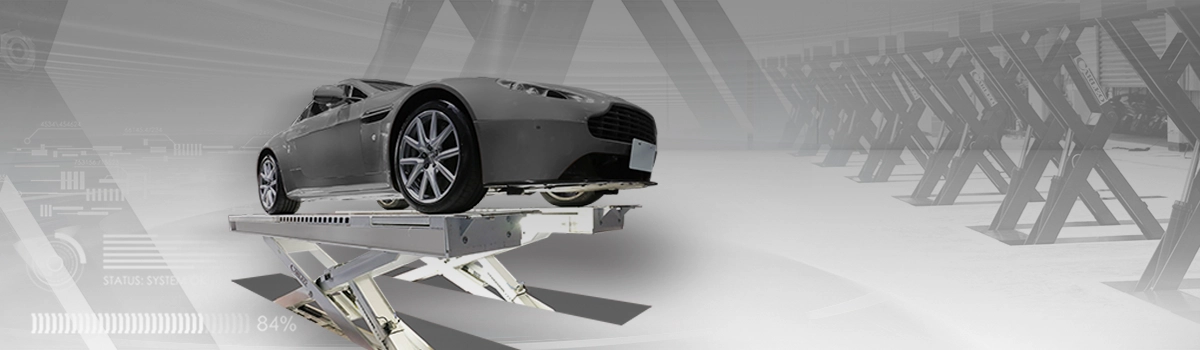
A 3D wheel alignment lift should be selected as part of the complete alignment workflow, not as a stand-alone lifting device. Before choosing a model, confirm the vehicle weight range, wheelbase and track range, runway or platform layout, leveling condition, required alignment accessories, installation space, and the interface requirements of the 3D wheel aligner. A lift that matches the workshop workflow can help technicians position vehicles consistently and prepare the vehicle for the alignment procedure; final compatibility must be confirmed with the lift manufacturer and the alignment-system supplier.
WHAT IS A 3D WHEEL ALIGNMENT LIFT?
A 3D wheel alignment lift is a vehicle lift configured to support wheel-alignment work. In practice, the lift must allow the vehicle to be placed and held in the position required by the alignment process while providing suitable working access and space for the alignment equipment. The lift itself does not replace the 3D wheel aligner; it is one part of the overall measurement and service setup.
WHY LIFT SELECTION MATTERS FOR A 3D ALIGNMENT WORKFLOW
Wheel alignment depends on a controlled service process. Vehicle size, tire condition, suspension condition, loading practice, alignment equipment, and technician procedure can all affect the work performed. The lift should therefore be reviewed for its capacity, platform geometry, lifting range, locking method, accessory configuration, and installation condition. A workshop should not assume that every scissor lift or every runway lift is automatically suitable for a 3D alignment process.
CORE 3D WHEEL ALIGNMENT LIFT REQUIREMENTS
1. RATED CAPACITY AND VEHICLE COVERAGE
Start with the vehicles the workshop actually services. Compare the lift’s rated capacity with the maximum vehicle weight, axle load distribution, and service mix, such as passenger cars, SUVs, light commercial vehicles, or heavier vehicles. Capacity must be checked for the exact lift configuration and operating mode, especially where an upper and lower lifting system have different published ratings.
2. PLATFORM GEOMETRY, WHEELBASE, AND TRACK COMPATIBILITY
Runway length, runway width, spacing, and approach configuration affect whether vehicles can be positioned correctly. Record the shortest and longest wheelbase, the expected track-width range, tire size, and the approach clearance required by the workshop. The correct lift is not simply the longest or widest model; it is the model whose usable dimensions match the vehicles and the alignment procedure being performed.
3. PLATFORM LEVELING AND STRUCTURAL STABILITY
For a wheel-alignment workflow, the working surfaces should be checked for level and the lift should operate according to the manufacturer’s installation and maintenance instructions. CARLEO’s Wheel Alignment Car Lifts category describes its alignment series as designed for precision alignment and notes leveling inspection in its factory information. The final on-site result still depends on correct installation, foundation condition, commissioning, and periodic inspection.
4. SLIP PLATES AND TURNTABLES
Slip plates and turntables are often relevant to the wheel-alignment procedure because they allow the wheels to move or steer as required by the equipment workflow. However, the required size, load rating, position, and whether these items are standard, optional, or supplied by another vendor must be confirmed for each lift model. When comparing a 3D alignment car lift manufacturer, request a complete accessory list rather than relying on product photos alone.
5. LIFTING HEIGHT, WORKING ACCESS, AND WORKSHOP LAYOUT
The preferred lifting height depends on how the workshop combines alignment, inspection, suspension work, tire service, and underbody repair. Confirm technician access around the vehicle, clearance for cameras or targets, door opening space, approach ramps, drainage or recessed-floor conditions, and the route used to move vehicles into and out of the bay. A layout review should be completed before ordering the equipment.
6. POWER, AIR SUPPLY, CONTROLS, AND SAFETY DEVICES
Review the product-specific electrical supply, air-pressure requirement where applicable, control type, locking system, emergency-lowering method, and maintenance access. CARLEO product pages publish different values by model. For example, the SL-656S product page lists separate upper and lower capacities and lifting heights, while the SL-656A product page identifies a thin-type configuration with its own capacity and lifting-height data. These details should be checked against the current datasheet and the destination-market requirements before final selection.
HOW TO MATCH A LIFT WITH A 3D WHEEL ALIGNER
Use the following questions as a project checklist before requesting a quotation:
CARLEO WHEEL ALIGNMENT LIFT OPTIONS TO REVIEW
CARLEO currently lists several wheel-alignment lift models on its English product category page, including SL-656S-75, SL-656A, SL-656ED, SL-656S, SL-656-500, and SL-565HS-35. The appropriate model should be selected using the current model datasheet, accessory configuration, vehicle profile, and installation plan. The following examples are included only to show why model-specific review is necessary.
| Model | Published category / product-page reference | Selection note |
| SL-656S-75 |
Heavy Duty Wheel Alignment Lift; category page lists upper 4,000 kg / lower 7,500 kg. |
Confirm vehicle mix, accessories, floor plan, and current datasheet. |
| SL-656ED |
Wheel Alignment Lift; product page lists upper 4,000 kg / lower 5,500 kg. |
Confirm current document version and accessory configuration. |
| SL-656-500 |
Wheel Alignment Lift; product page lists upper 4,000 kg / lower 5,000 kg. |
Confirm the actual installation, power, air, and workflow requirements. |
| SL-656S |
Wheel Alignment Lift; product page lists upper 4,000 kg / lower 4,500 kg. |
Confirm the actual installation, power, air, and workflow requirements. |
| SL-656A |
Thin Type Wheel Alignment Lift; product page lists upper 3,000 kg / lower 4,000 kg. |
Confirm vehicle coverage and thin-type installation suitability. |
| SL-565HS-35 |
Wheel Alignment Lift models listed on category page. upper 3,000 kg / lower 3,500 kg. |
Confirm current technical values and exact positioning for 3D alignment projects. |
COMMON SELECTION MISTAKES
FAQ
CAN ANY SCISSOR LIFT BE USED FOR 3D WHEEL ALIGNMENT?
No. A scissor lift may be suitable only when its dimensions, platform condition, accessory arrangement, installation, and workflow meet the requirements of the alignment project. Confirm the exact lift model and alignment-system procedure before purchase or installation.
WHAT INFORMATION SHOULD I PROVIDE WHEN REQUESTING A WHEEL ALIGNMENT LIFT QUOTATION?
Provide the vehicle types and maximum weight, wheelbase and track range, the 3D aligner brand/model, required accessories, workshop drawing, floor condition, available power and air supply, target delivery market, and any required standards or documentation.
DOES A HIGHER LIFTING CAPACITY AUTOMATICALLY MEAN A BETTER ALIGNMENT LIFT?
Not necessarily. Capacity is only one selection factor. The lift must also fit the intended vehicles, alignment workflow, workspace, accessory configuration, installation conditions, and maintenance plan.
REQUEST 3D ALIGNMENT LIFT SELECTION SUPPORT
For a project-specific recommendation, provide CARLEO with your vehicle range, alignment equipment details, bay layout, floor and utility information, target market, and required accessories. CARLEO can then confirm the applicable wheel-alignment lift model, available documentation, and configuration options for the project. Contact Us.